

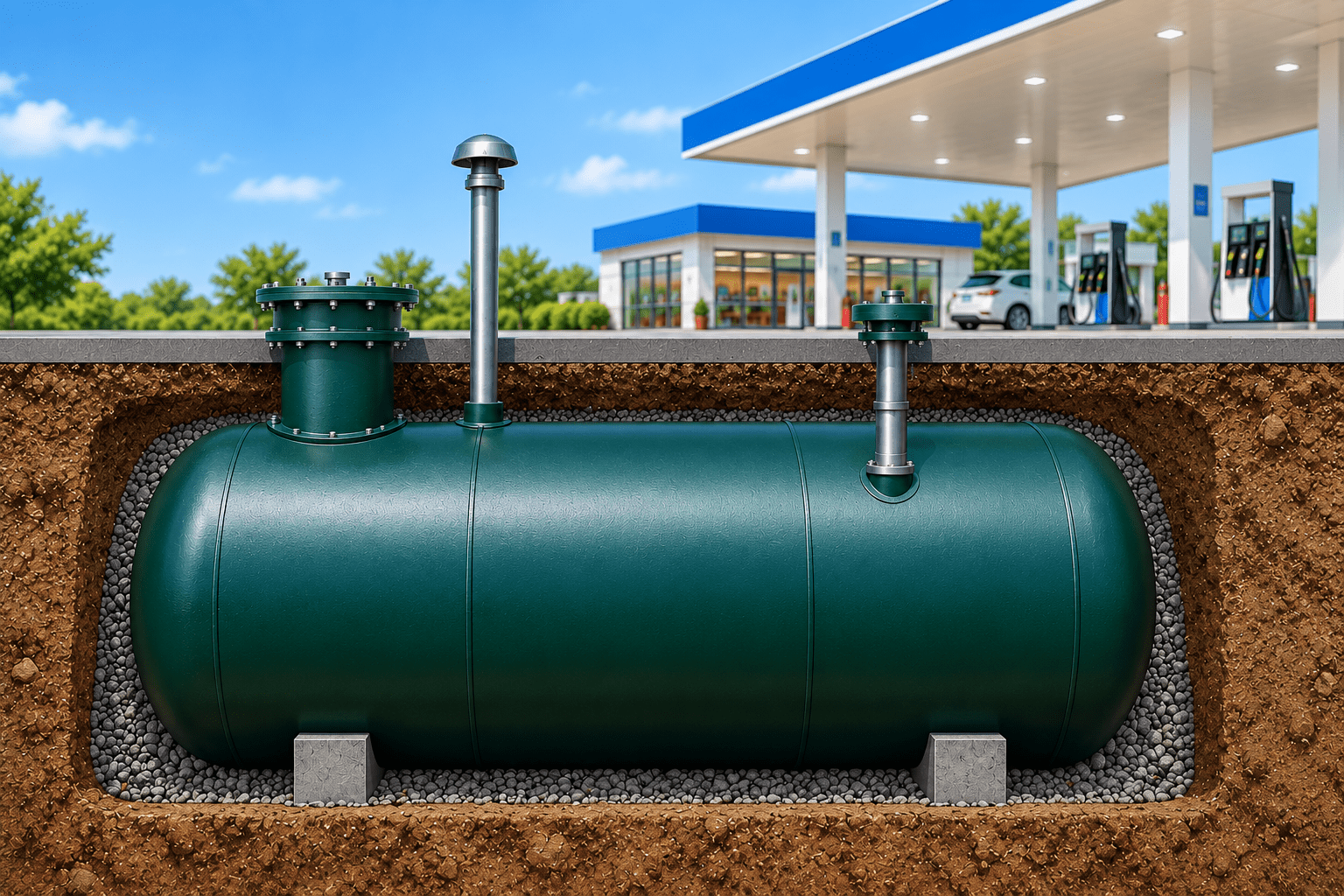
Underground fuel storage tanks are specially designed tanks installed below ground level to safely store fuels such as petrol, diesel, and other petroleum products. They are commonly used at petrol stations, industrial facilities, commercial sites, transport hubs, and locations where a reliable fuel storage system is required without occupying valuable surface space.
An underground fuel storage tank is designed to store fuel securely while protecting the stored product and helping reduce risks associated with exposure, accidental damage, and environmental contamination. However, proper tank selection, installation, corrosion protection, monitoring, and maintenance are essential for safe and reliable operation.
What Is an Underground Fuel Storage Tank?
An underground fuel storage tank (UST) is a storage vessel installed beneath the ground for storing petroleum-based fuels and other compatible liquids.
Depending on the application, underground fuel storage tanks may be used for:
- Diesel storage
- Petrol storage
- Industrial fuel storage
- Backup generator fuel
- Fleet fuelling operations
- Commercial fuel storage
- Fuel dispensing stations
The tank is connected to associated equipment such as fill pipes, vent pipes, fuel lines, pumps, dispensing systems and monitoring equipment.
Quick Answer
An underground fuel storage tank works by storing fuel safely below ground and transferring it through connected piping and pumping systems when fuel is required.
How Do Underground Fuel Storage Tanks Work?
The basic operation of an underground fuel storage tank involves several connected systems.
1. Fuel Delivery
Fuel is delivered into the underground storage tank through a dedicated fill point and fill pipe.
During this process, the tank must be protected from overfilling. Depending on the system design, overfill prevention equipment and monitoring systems may be used.
2. Fuel Storage
Once delivered, the fuel remains inside the underground storage tank until it is needed.
The tank must be compatible with the type of fuel being stored and designed to withstand underground environmental conditions.
3. Venting
Fuel storage systems require appropriate venting arrangements.
Changes in temperature and fuel volume can create pressure changes inside the tank. Vent systems help manage these changes as part of the overall fuel storage system design.
4. Fuel Transfer
When fuel is required, it is transferred from the underground storage tank through connected piping.
Depending on the application, the fuel may be supplied to:
- Fuel dispensers
- Vehicles
- Industrial equipment
- Generators
- Machinery
- Internal fuel distribution systems
5. Monitoring
Modern underground fuel storage tank systems may include monitoring solutions that help operators identify issues such as abnormal fuel levels or potential system problems.
Regular monitoring and inspection are important for maintaining the reliability of an underground fuel storage system.
Main Components of an Underground Fuel Storage System
An underground fuel storage project involves more than the tank itself.
Underground Storage Tank
The tank is the primary component responsible for storing the fuel.
Tank capacity, material, and construction requirements depend on the fuel type, project requirements, and applicable regulations.
Fill Pipe
The fill pipe allows fuel to be transferred into the tank.
Vent Pipe
The vent pipe supports the safe management of pressure changes within the storage system.
Fuel Piping
Fuel piping transfers fuel between the tank and the point of use.
Pumps
Pumps may be used to move fuel from the underground fuel storage tank to dispensing or equipment systems.
Monitoring Equipment
Monitoring equipment can help track important operational conditions within the fuel storage system.
Leak Detection Systems
Leak detection may form an important part of an underground fuel storage tank system, helping identify potential problems before they become major incidents.
Why Are Fuel Storage Tanks Installed Underground?
Underground installation offers several practical advantages.
Better Use of Surface Space
One of the biggest benefits of underground fuel storage tanks is that they do not occupy significant above-ground space.
This can be particularly useful for:
- Petrol stations
- Commercial facilities
- Industrial sites
- Logistics hubs
- Urban locations
The surface area can be used for vehicle movement, equipment, or other operations.
Physical Protection
Installing a fuel storage tank below ground can help protect it from certain external impacts that may affect above-ground installations.
Improved Site Planning
Underground fuel storage can support more efficient site layouts where above-ground space is limited.
Applications of Underground Fuel Storage Tanks
Underground fuel storage tanks are used across several industries.
Petrol Stations
Petrol stations commonly use underground fuel storage tanks to store petrol and diesel before dispensing fuel to vehicles.
Industrial Facilities
Industrial operations may require diesel or other fuels for equipment and machinery.
Generator Backup Systems
Large facilities may require stored fuel to support backup power generators.
Fleet Operations
Companies operating large vehicle fleets may require fuel storage and fuelling infrastructure.
Transport and Logistics Facilities
Fuel storage can support vehicles and equipment operating at logistics facilities.
Important Factors in Underground Fuel Storage Tank Design
Selecting and designing an underground fuel storage system requires careful planning.
Important factors include:
- Type of fuel
- Required storage capacity
- Site conditions
- Soil characteristics
- Groundwater conditions
- Tank material
- Corrosion protection
- Fuel transfer requirements
- Monitoring requirements
- Access for inspection and maintenance
- Applicable safety and environmental requirements
Assess each project individually rather than using a one-size-fits-all approach.
Underground Fuel Storage Tank Maintenance
Regular maintenance is essential for long-term performance.
A maintenance programme may include:
- Visual inspection of accessible components
- Checking piping and connections
- Monitoring fuel levels
- Inspecting monitoring equipment
- Reviewing leak detection systems
- Checking corrosion protection systems
- Testing relevant equipment as required
Exact maintenance requirements depend on the tank system, stored product, and applicable requirements.
Conclusion
Underground fuel storage tanks provide a practical solution for storing petrol, diesel and other fuels while making efficient use of available land. However, a successful underground fuel storage project depends on much more than simply selecting a tank.
Factors such as tank selection, site conditions, installation, piping, corrosion protection, monitoring and maintenance all play an important role.
For industrial and commercial projects, working with an experienced engineering and project execution team can help ensure that the complete fuel storage infrastructure is planned around the specific operational requirements of the site.
Frequently Asked Questions
What is an underground fuel storage tank?
An underground fuel storage tank is a tank installed below ground level to store fuels such as petrol and diesel.
How does an underground fuel storage tank work?
Fuel is delivered into the tank through a fill system, stored until required, and transferred through pumps and piping to vehicles, equipment, or other fuel-consuming systems.
Where are underground fuel storage tanks used?
They are commonly used at petrol stations, industrial facilities, commercial sites, logistics hubs, and locations with fuel dispensing requirements.
What fuels can be stored in underground tanks?
Depending on tank compatibility and system design, underground tanks can store fuels such as diesel and petrol.
Why is maintenance important?
Regular maintenance and monitoring can help identify potential issues and support the safe and reliable operation of the fuel storage system.


