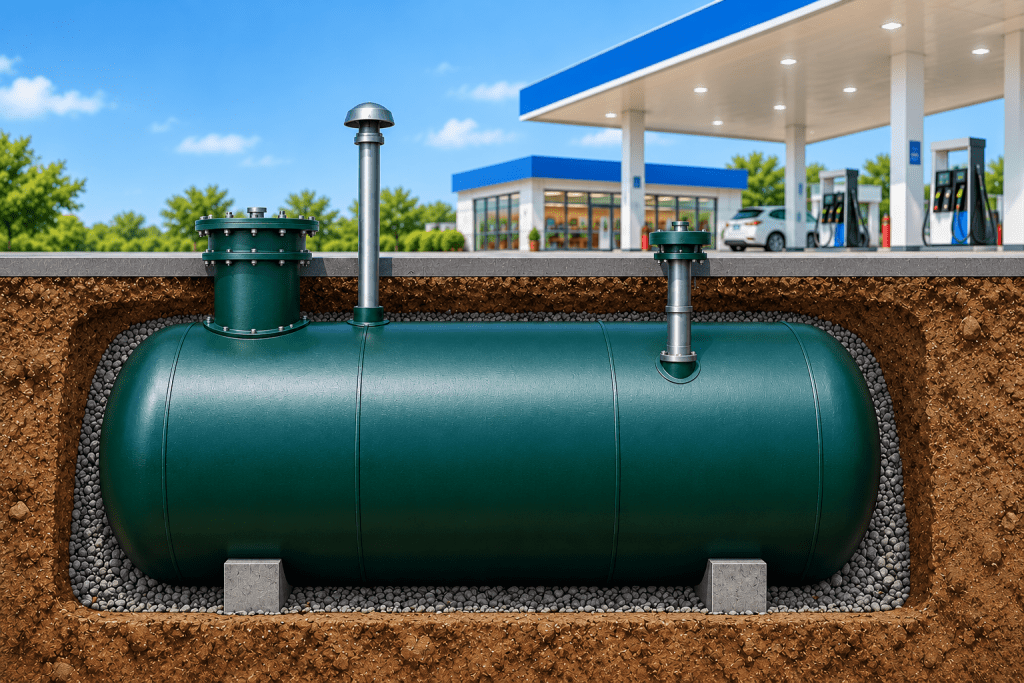

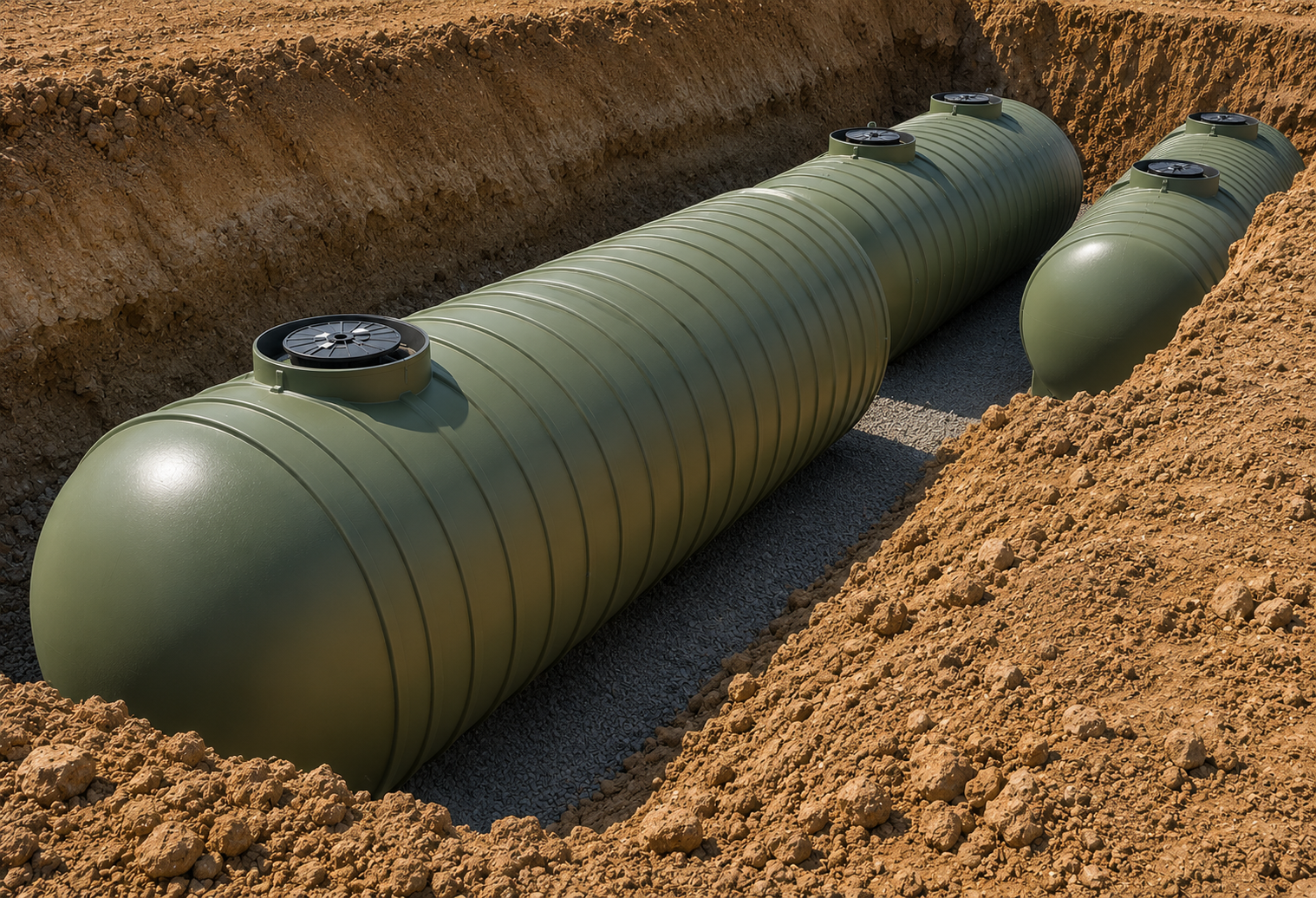
Underground storage tanks are purpose-built tanks installed below ground level to store water, fuel, chemicals, fire-fighting reserves, and other liquids. They are commonly used in industrial facilities, commercial buildings, manufacturing plants, warehouses, infrastructure projects, and large-scale developments where space, safety, and storage capacity are important considerations.
The right underground storage tank depends on factors such as storage capacity, tank material, soil conditions, groundwater level, liquid being stored, structural loads, waterproofing requirements, and applicable engineering standards.
What Is an Underground Storage Tank?
An underground storage tank is a storage vessel installed below the finished ground level. Depending on the application, tanks can be constructed using reinforced concrete, steel, or other engineered materials.
Unlike above-ground tanks, underground systems use the available space below the surface while keeping the surrounding area available for buildings, roads, parking, landscaping, or industrial operations.
For industrial projects, underground tanks are often incorporated into the overall civil and infrastructure design rather than treated as an isolated structure.
What Are the Different Types of Underground Storage Tanks?
Underground storage tanks can be classified according to their material, purpose, and application.
1. Underground Water Storage Tanks
These tanks are used to store water for:
- Industrial processes
- Domestic requirements
- Rainwater harvesting
- Fire protection
- Utility systems
- Emergency reserves
2. Underground Fire Water Tanks
Industrial and commercial facilities may require dedicated water storage for fire protection systems.
Tank capacity and configuration should be determined according to the facility’s fire-safety requirements and applicable standards.
3. Underground Fuel Storage Tanks
These are designed to store fuels such as diesel and other petroleum products.
Because fuel storage presents additional safety and environmental considerations, design, installation, leak prevention, and monitoring requirements are particularly important.
4. Underground Chemical Storage Tanks
Chemical storage requires careful selection of materials and protective systems because the stored substance can affect tank durability and structural performance.
5. Underground Rainwater Storage Tanks
These tanks collect and store rainwater for applications such as irrigation, landscaping, groundwater recharge systems, and non-potable uses.
How Are Underground Storage Tanks Designed?
Underground tank design begins with understanding the site, stored liquid, and required capacity.
Important considerations include:
- Required storage capacity
- Tank dimensions
- Soil bearing capacity
- Groundwater conditions
- External earth pressure
- Internal liquid pressure
- Vehicle or building loads above the tank
- Waterproofing
- Drainage
- Access and maintenance
- Tank material
- Inlet and outlet arrangements
The structural design should be completed by qualified engineers because underground structures experience both internal and external loads.
What Materials Are Used for Underground Storage Tanks?
Common materials include:
Reinforced Concrete
Reinforced concrete is widely used for large-capacity underground water and fire-water tanks.
Advantages include:
High structural capacity
Suitability for large tanks
Long service life when properly designed
Integration with civil construction
Steel
Steel tanks can provide high strength and controlled fabrication.
However, corrosion protection and appropriate coating systems become important, particularly in aggressive soil or groundwater environments.
What Is the Underground Storage Tank Installation Process?
A typical installation process involves:
Site investigation → Excavation → Foundation preparation → Tank construction/placement → Waterproofing → Pipe connections → Testing → Backfilling → Commissioning
The actual sequence depends on whether the tank is cast in situ, prefabricated, or assembled using engineered components.
What Are the Benefits of Underground Storage Tanks?
Underground tanks can provide several advantages:
- Efficient use of land
- Large storage capacity
- Protection from direct environmental exposure
- Reduced visual impact
- Better integration with industrial sites
- Potentially improved site utilisation
- Suitable for applications where above-ground space is limited
What Should You Consider Before Installing an Underground Tank?
Before construction, evaluate:
- Soil conditions
- Groundwater level
- Tank capacity
- Stored material
- Structural loads
- Waterproofing requirements
- Accessibility
- Maintenance requirements
- Drainage
- Applicable regulations and engineering standards